Keep the source intact
The product location, photos, notes, classification, and inspection history remain connected when the team treats the finding as a nonconformance.
Manufacturing nonconformance management
Once a deviation becomes a nonconformance, SurfacePoint keeps ownership, disposition, containment, root cause work, corrective or preventive actions, and verification tied to the originating evidence.
For quality managers and cross-functional owners coordinating the work after a deviation requires formal follow-up.
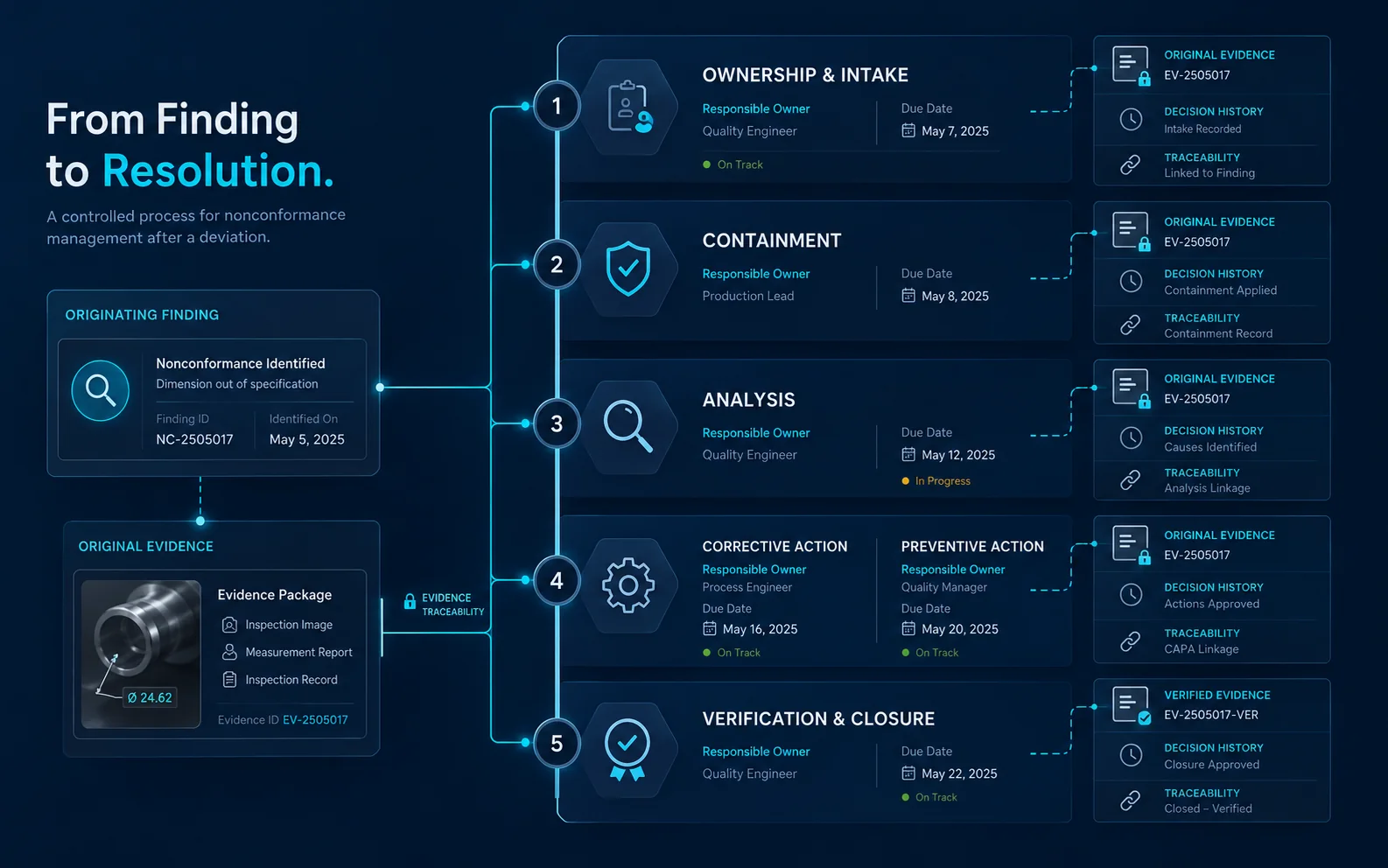
The handoff
The product location, photos, notes, classification, and inspection history remain connected when the team treats the finding as a nonconformance.
Record status, disposition, approvals, owners, due dates, reminders, root cause work, and quality actions around that evidence.
Post-deviation workflow
SurfacePoint records the workflow; each organization remains responsible for its own quality methods, approval rules, and closure criteria.
Identify the responsible people, record the quality decision, and retain its justification.
Document containment work and its owner, status, and due date.
Manage root cause analysis, participants, status changes, review, and approval.
Track corrective and preventive actions with owners, due dates, completion, and reminders.
Retain verification and closure state with the evidence and action history.
Control points
Keep RCA, containment, and each quality action attached to an accountable owner.
Use due dates, reminders, and overdue views to make pending work visible.
Retain dispositions, approvals, comments, status transitions, and completion state.
Keep verification and closure connected to the originating nonconformance record.