Spatial context
A point on the matching digital twin identifies the area of the real product under discussion.
Surface inspection reporting
Record what was found on the real product, show where it was found on the matching digital twin, retain supporting evidence, and generate a defensible inspection record.
For inspection and quality teams that need to communicate a surface finding without losing its physical location or visual evidence.
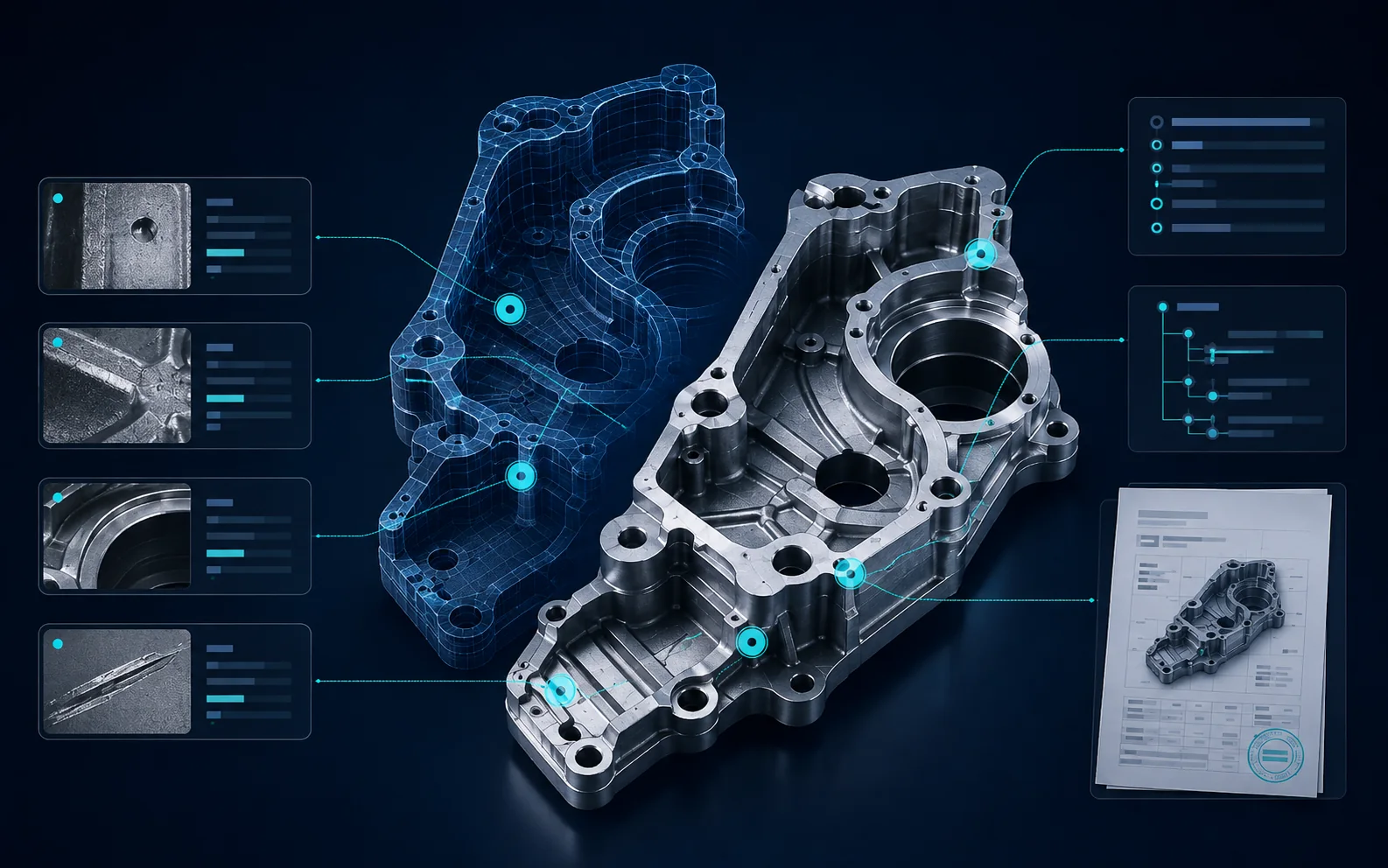
A defensible inspection record
A surface finding can be difficult to communicate from a cropped photo or text description alone. SurfacePoint retains spatial and visual context together.
A point on the matching digital twin identifies the area of the real product under discussion.
Photos and descriptions stay with the observation rather than in a separate folder or message.
Project, plant, material, batch, serial, lot, PO, and trace ID can accompany the finding where the team uses them.
Classification, notes, disposition, approvals, and related action history provide the decision context.
From product to PDF
Examine the real product using the team's established inspection process.
Place each finding on the corresponding point of the digital twin.
Add photos, descriptions, classifications, and relevant trace context.
Record the decision and preserve the conversation around the observation.
Generate project-, inspection-run-, session-, or finding-level PDF output as appropriate.
Clear handoffs
Use a broad report for the inspection or project context, or a focused report when one finding needs its own evidence and history.
Communicate the wider set of observations and their status.
Communicate one defect or observation with its supporting location and record context.